
Key Takeaways
- Automating content creation saves hours of manual writing while maintaining high SEO standards
- AI analyzes existing product data to create contextually relevant and engaging blog posts
- Integrated links drive readers directly from educational content to the checkout page
- Platforms like WooCommerce and Magento benefit significantly from consistent automated posting schedules
In the fast-paced digital landscape of Winter 2026, e-commerce store owners face an uphill battle: the constant need for fresh, high-quality content to appease search engines and engage customers. Traditional content marketing often requires significant investment in freelancers or hours of manual writing. However, the emergence of the auto blog has revolutionized how retailers approach organic growth, allowing for hands-off management of complex content calendars.
According to Wikipedia's SEO overview, search engines prioritize sites that provide regular, authoritative updates. For a modern online store, this means transforming product descriptions into storytelling experiences. By leveraging AI-powered blog generation, businesses can now maintain a consistent presence without the heavy lifting typically associated with digital marketing.
Stop wasting hours on manual writing. Automate your store's blog today!
Get Started with BlogGenAuto →The Rise of the Auto Blog in 2026: Why Stores Need Automation
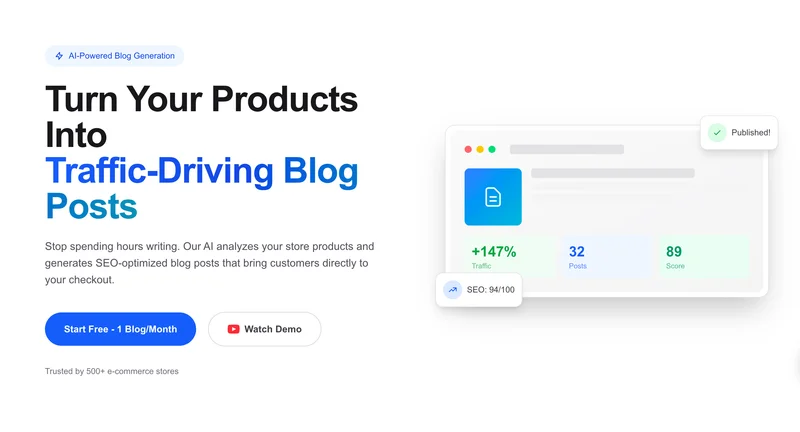
BlogGenAuto - Homepage
Buy NowShifting from Manual to AI Content
The shift toward automated e-commerce content is driven by the sheer volume of data stores handle today. Manual writing simply cannot scale when a shop carries thousands of unique SKUs. AI systems now analyze these SKUs to produce long-form articles that sound human and remain helpful to the end-user.
Meeting 2026 Search Engine Standards
Google's emphasis on Helpful Content means that an auto blog must do more than just repeat keywords. It must provide context. Modern AI tools understand intent, ensuring that every post generated contributes to a store's topical authority within its specific niche.
How to Automate E-commerce Blogging for Higher ROI
Connecting Your Product Feed
The first step in how to automate e-commerce blogging is integration. By connecting your store’s product feed to an AI engine, the software can pull technical specifications, pricing, and benefits. This ensures the content is always accurate and reflects current inventory levels.
Turning Specs into Stories
Rather than just listing product features, automated systems create narrative-driven posts. For example, a spec sheet for a winter coat becomes a blog post titled "Top 5 Trends for Winter 2026: Staying Warm and Stylish." This transition is vital for engaging customers who are in the research phase of their journey.
Boost your organic reach with 1-click publishing.
Try it for under $1 →Boosting Organic Traffic for WooCommerce and Magento
Specialized SEO for Platform Success
When you boost organic traffic for WooCommerce, you need content that plays well with platform-specific plugins. AI-generated posts are often pre-optimized for metadata and header structures, making them ready for immediate indexing by search spiders.
AI Content Marketing for Magento
Large-scale AI content marketing for Magento allows enterprise-level stores to compete for long-tail keywords. By covering specific user questions and product comparisons, these stores can capture high-intent traffic that would otherwise go to competitors like Amazon or big-box retailers.
Cost-Effective SEO for Small Business
Outsourcing vs. AI Generation
For most entrepreneurs, cost-effective SEO for small business is the primary goal. Hiring a freelance writer can cost hundreds of dollars per post. In contrast, AI platforms like BlogGenAuto offer the same level of depth for a fraction of the price, often under $1 per article.
Increasing Store Sales with Blogs
Educational content doesn't just inform; it converts. By increasing store sales with blogs, you provide the social proof and technical details customers need to feel confident in their purchase, directly funneling them toward the checkout page.
| Method | Time Cost | Financial Cost |
|---|---|---|
| Manual Writing | 4-6 Hours | Free (Owner time) |
| Freelancer | 3-5 Days | $50 - $200 per post |
| BlogGenAuto | Under 5 Mins | Under $1 per post |
Best Shopify and OpenCart SEO Tools 2026
Key Features to Look For
The best Shopify SEO tools 2026 focus on automation. According to Google Search Central's SEO Guide, structured data and mobile optimization are non-negotiable. Modern AI tools ensure that every blog post is responsive and rich with schema markup.
Integrating Social Sharing Automatically
Visibility shouldn't stop at search results. Automation tools now facilitate instant social sharing, amplifying your content's reach across networks the moment it is published. This creates a multi-channel marketing effect with zero extra effort from the merchant.
Ready to scale your store traffic in 2026?
Connect Your Store Now →
Frequently Asked Questions
What is an auto blog for e-commerce?
An auto blog is a software solution that uses artificial intelligence to generate and publish blog posts automatically for an online store. It pulls information from your product database to create helpful, search-optimized articles that drive organic traffic.
Will search engines penalize AI-generated content?
No, search engines like Google focus on the quality and helpfulness of content rather than how it was created. As long as the AI-generated posts provide value to the reader and answer their search queries, they will rank well.
How long does it take to set up?
Platforms like BlogGenAuto are designed for speed. You can connect your WooCommerce or Magento store and begin publishing your first SEO-optimized articles in under five minutes.
Can it help with product conversions?
Absolutely. The content is designed to include natural links back to your product pages. By educating the customer first, you build trust, making them more likely to click through to your checkout page and complete a purchase.
Is it really cheaper than a freelancer?
Yes, significantly. While a professional writer might charge $100 for a single article, automated solutions can generate hundreds of high-quality posts for a fraction of that cost, often totaling less than $1 per article.
Conclusion
As we move through Winter 2026, the competitive edge in e-commerce belongs to those who embrace automation. Integrating an auto blog into your marketing strategy allows you to scale your organic reach without scaling your workload. It is the most efficient way to maintain a high-ranking presence on Google while focusing on your core business operations.
Whether you are running a boutique on WooCommerce or a large-scale Magento store, the ability to turn product data into traffic-driving stories is invaluable. Don't let your store fall behind in 2026. Start automating your content creation today and watch your organic traffic—and your sales—reach new heights.
About the Author

Written by BlogGen
Specialist in SEO optimization and blog content strategy. Helping e-commerce stores increase organic traffic through AI-powered content generation.