
Key Takeaways
- AI powered automation transforms existing product data into high ranking search content
- Automated blogging significantly reduces the cost per article compared to hiring professional freelancers
- Consistent content publishing is a primary ranking factor for major search engines in 2026
- Integrating blog content directly with product checkout pages boosts overall conversion rates
The digital marketplace in Spring 2026 is more competitive than ever, requiring store owners to find innovative ways to capture search engine attention. As organic visibility becomes harder to maintain through traditional methods, implementing an auto blog has become a cornerstone strategy for successful e-commerce businesses. By leveraging artificial intelligence to bridge the gap between product inventory and search-optimized narratives, stores can achieve unprecedented growth.
Content marketing remains the most effective long-term driver of organic traffic. However, the time and financial investment required to maintain a manual blog often deter small to medium-sized enterprises. According to Wikipedia's entry on SEO, freshness and relevance are critical components of ranking algorithms, making consistent output essential for any online retailer.
Ready to automate your store's content strategy today?
Get Started with BlogGenAuto →The Benefits of Using an Auto Blog for E-commerce Success
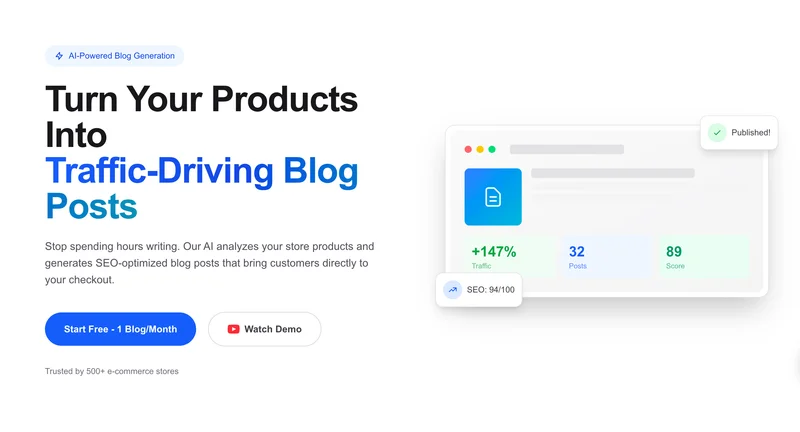
BlogGenAuto - Homepage
Buy NowDominating Search Results in 2026
Search engines now prioritize sites that provide comprehensive answers to user queries. An auto blog allows you to cover thousands of long-tail keywords related to your products that you might otherwise miss. This ensures your store appears when customers search for specific problems your products solve.
Cost-Effective Content Marketing
Traditional blogging can cost hundreds of dollars per post when hiring high-quality freelancers. By utilizing an automated solution, the cost per article drops to less than a dollar. This democratizes high-quality content, allowing even startup e-commerce stores to compete with industry giants.
Direct-to-Checkout Conversions
Unlike generic blog posts, AI-generated content for e-commerce focuses on product utility. This means every post acts as a funnel, guiding the reader directly to the product page or checkout, significantly reducing the customer journey and increasing immediate sales.
How AI Transforms Product Data into Engaging Content
Analyzing Inventory for SEO Opportunities
Modern AI platforms don't just write; they analyze. By scanning your existing WooCommerce or Magento inventory, the system identifies key features, benefits, and specifications that can be turned into compelling stories. This data-driven approach ensures every word serves a purpose for SEO content creation for e-commerce.
Semantic Content Generation
According to research on National Institute of Standards and Technology AI standards, modern natural language processing produces text that is indistinguishable from human writing. The AI uses semantic associations to create helpful guides, listicles, and comparison articles that search engines love.
Transform your product list into a traffic machine in under 5 minutes.
Connect Your Store Now →Supporting WooCommerce, Magento, and Major E-commerce Platforms
Seamless WooCommerce Integration
For those running on WordPress, an integrated approach is vital. The AI connects directly to your database, allowing for one-click publishing. This eliminates the need for manual copy-pasting and ensures your blog remains perfectly synced with your latest Spring 2026 arrivals.
Magento and Custom Platform Flexibility
Enterprise-level stores on Magento or other custom setups require robust API support. Automated content systems are built to handle large inventories, generating hundreds of unique posts that highlight the diverse range of products available in your store without slowing down your site performance.
AI Automation vs. Manual Content Creation
When deciding how to manage your marketing budget, it is helpful to compare the efficiency of different methods. As documented in various Small Business Administration marketing resources, resource allocation is the number one predictor of long-term viability for online shops.
| Metric | Manual Freelancer | BlogGenAuto AI |
|---|---|---|
| Average Cost | $50 - $200 per post | Less than $1 per post |
| Time to Publish | 3-5 days | Under 5 minutes |
| Product Analysis | Limited / Requires Brief | Full Inventory Sync |
| Scalability | Very Low | Extremely High |
Scaling Your Content Strategy in Spring 2026
Leveraging Seasonal Trends
The beauty of an automated system is its ability to pivot instantly. As Spring 2026 trends emerge, your auto blog can begin generating content that focuses on seasonal needs, such as spring cleaning, outdoor activities, or the latest fashion shifts, ensuring your store is always part of the current conversation.
Enhancing User Experience (UX)
Quality content isn't just for bots; it's for humans. By providing educational articles alongside your product listings, you build trust and authority. Research on educational consumer engagement suggests that informed customers are 40% more likely to return for future purchases.
Stop overpaying for content and start ranking today.
Try BlogGenAuto for $1 →
Frequently Asked Questions
Is auto blog content good for SEO?
Yes, provided the AI is specifically trained for e-commerce. Modern tools prioritize search intent, keyword density, and internal linking to product pages, making them highly effective for ranking in 2026 search environments.
How does the platform access my products?
The platform uses secure API connections to your WooCommerce, Magento, or Shopify store. It reads the product titles, descriptions, and tags to understand what you sell before generating relevant blog articles.
Does automated blogging cause Google penalties?
No. Google's current guidelines focus on "Helpful Content." As long as the blog posts provide value and answer consumer questions—which our AI is programmed to do—they are viewed positively by search algorithms.
Can I review the posts before they go live?
Absolutely. Most users choose the automated 'set and forget' mode, but you have full control to edit, schedule, or review any content before it is published to your live e-commerce site.
How much time can I actually save?
E-commerce owners typically spend 10-15 hours per month on basic blog management. An automated system reduces this to virtually zero, allowing you to focus on logistics, product sourcing, and customer service.
Is it really less than $1 per post?
Yes. Our pricing structure is designed to be the most cost-effective solution on the market. By using optimized AI pipelines, we can deliver high-quality content at a fraction of the price of traditional marketing agencies.
Conclusion
In the rapidly evolving e-commerce landscape of 2026, staying ahead requires a blend of efficiency and quality. Integrating an auto blog into your marketing arsenal is the most effective way to scale your organic presence without exhausting your budget or schedule. By turning your existing products into search-engine magnets, you create a sustainable growth engine for your store.
Whether you are on WooCommerce or Magento, the transition to automated content marketing is simple and fast. Don't let your competitors capture the traffic you deserve this Spring 2026 season. Start building your automated content empire today and watch your organic sales reach new heights.
About the Author

Written by BlogGen
Specialist in SEO optimization and blog content strategy. Helping e-commerce stores increase organic traffic through AI-powered content generation.