Key Takeaways
- Effective titles directly correlate with higher organic click-through rates in search engines.
- Automation tools significantly reduce the time required for e-commerce content management.
- SEO optimization in 2026 requires a balance between keyword density and natural human appeal.
- Product titles should lead customers directly toward the checkout page for maximum conversion.
In the competitive landscape of Spring 2026, standing out in search results requires more than just high-quality products; it requires headlines that demand attention. While many store owners rely on manual effort, the best title generators offer a way to automate the process of creating compelling labels that drive clicks. According to Wikipedia's entry on headlines, the purpose of a title is to quickly and briefly summarize the content that follows while attracting interest.
Effective title generation is no longer just about keywords; it is about psychological triggers that influence buyer behavior. As digital storefronts evolve on platforms like WooCommerce and Magento, the need for scalability becomes paramount. Manual writing cannot keep pace with the thousands of product updates required in a modern retail environment.
The Science of High-Converting E-commerce Headlines
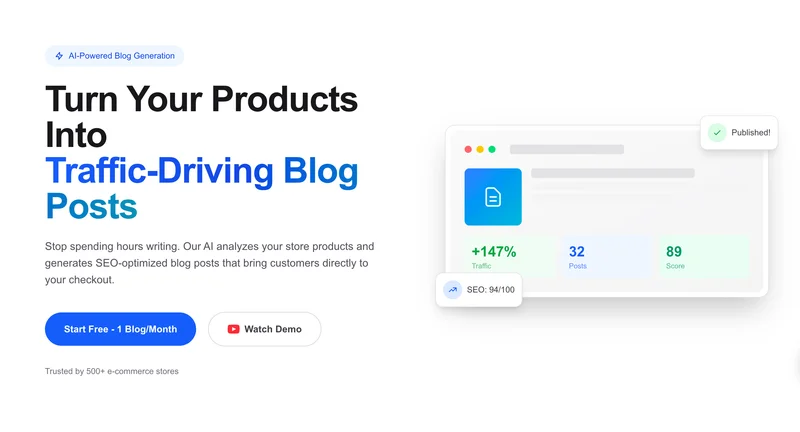
BlogGenAuto - Homepage
Buy NowPsychology of a Catchy Title Creator
A great title creator understands that humans process visual information rapidly. By focusing on benefit-driven language, you can tap into the immediate needs of your audience. According to Harvard Business Review research, headlines that evoke specific emotions or provide clear solutions see significantly higher engagement rates.
Formulaic Approaches for 2026
High-converting headline formulas for 2026 often include a mix of social proof, urgency, and specific utility. For instance, using phrases like "The Only Guide You Need" or "5 Proven Methods" creates a sense of authority. When these are combined with e-commerce data, the results are powerful.
The Evolution of Automated Title Generators
Beyond Basic Naming Tools
Early iterations of automation simply swapped synonyms, but modern title generators utilize deep learning to understand context. They analyze product descriptions, specifications, and user intent to produce labels that feel human-written but are mathematically optimized for performance. This level of sophistication is necessary for maintaining a competitive edge in 2026.
Scalability for Global Stores
For businesses managing massive inventories, automated title generation is a necessity rather than a luxury. It allows for the rapid deployment of regional content without the overhead of massive editorial teams. By integrating these tools, companies can ensure consistency across all product categories.
Stop wasting hours writing titles manually and start driving organic traffic today!
Try BlogGenAuto for E-commerce →E-commerce Product Title Optimization for 2026
Aligning with Search Intent
The key to e-commerce product title optimization lies in understanding search intent. Whether a user is looking for information (top of funnel) or ready to purchase (bottom of funnel) determines how the title should be structured. According to Google Search Central, high-quality title links are crucial for providing a positive user experience and improving site visibility.
The Impact of CTR on Rankings
Search engines increasingly use click-through rate (CTR) as a quality signal. If your product titles are engaging and relevant, you will naturally climb the rankings. Using effective headline writing tips, such as including the main value proposition early in the text, can result in a dramatic shift in organic traffic volume.
Leveraging AI for Content Marketing Efficiency
From Product Data to Blog Posts
AI-powered tools are now capable of more than just simple naming; they can transform basic product data into comprehensive blog posts. Software like specialized title generators can bridge the gap between static inventory and dynamic marketing content. This ensures that every item in your store has a chance to attract traffic through informational queries.
Reducing Operational Costs
Automation eliminates the need for expensive freelancers or hundreds of hours of manual labor. In 2026, the most successful stores are those that leverage automated content marketing tools to keep their websites fresh and relevant without blowing their marketing budget. The cost-to-benefit ratio of AI is now undeniably superior to manual alternatives.
Boost your search visibility with AI-driven content tailored for your store.
Get Started Now →Choosing Content Solutions for Modern Online Stores
Comparing Generation Tools
When selecting the best headline generators for bloggers or store owners, focus on integration and customization. A tool that connects directly to your WooCommerce or Magento store saves significant time during the publishing phase. The following table illustrates the key differences between manual writing and modern automated solutions.
| Feature | Manual Content Writing | AI Content Generation |
|---|---|---|
| Speed | Hours per post | Under 5 minutes |
| SEO Focus | Varies by writer skill | Built-in optimization |
| Cost | High (Freelance rates) | Extremely low (<$1) |
| Scalability | Difficult to scale | Unlimited capacity |
Converting Browsers to Buyers
Specialized platforms like BlogGenAuto are much more effective than basic title generators because they analyze product-specific data to create engaging blog narratives. These narratives don't just sit on your site; they actively bring customers directly to the checkout page by answering their questions and solving their problems within the content itself.
Frequently Asked Questions
How do titles affect SEO ranking?
Titles are one of the most critical on-page SEO elements. They provide search engines with context about your page content and determine the click-through rate from the search engine results page (SERP), which is a major ranking factor.
Can AI create catchy headlines that sound natural?
Yes, in 2026, AI models have advanced to the point where they can mimic human creativity and emotion. By using specific parameters, these tools can generate titles that are both SEO-friendly and highly engaging for human readers.
Is it better to use short or long titles for products?
The ideal length is generally between 50-60 characters for search engines. However, for e-commerce, it is vital to include key identifiers like brand, size, and material early in the title to help consumers make quick decisions.
How often should I update my store blog content?
Consistency is key. Publishing 2-3 times per week is often recommended for maximum organic growth. Automated tools make this frequency possible without requiring a full-time writing staff.
Do titles directly impact conversion rates?
Absolutely. A title is the first thing a customer sees. If it fails to build trust or interest immediately, they will likely bounce back to search results before even seeing your offer.
Transform your product pages into traffic-generating machines in under 5 minutes.
Connect Your Store Today →The digital marketplace of 2026 demands efficiency and precision. As competition increases, the ability to rapidly generate high-quality headlines and content becomes a primary differentiator for successful e-commerce brands. By understanding the core principles of search intent and leveraging the power of automation, you can ensure your store remains visible and profitable. Research from Statista shows that organic search remains the most sustainable driver of e-commerce traffic, making title optimization a high-ROI activity.
Ultimately, the goal of any store owner is to convert visitors into loyal customers. The investment in professional title generators and AI solutions is no longer optional for those who want to lead their industry. Start optimizing your headlines today and watch as your store traffic and conversion rates reach new heights in the Spring 2026 season.
About the Author

Written by BlogGen
Specialist in SEO optimization and blog content strategy. Helping e-commerce stores increase organic traffic through AI-powered content generation.